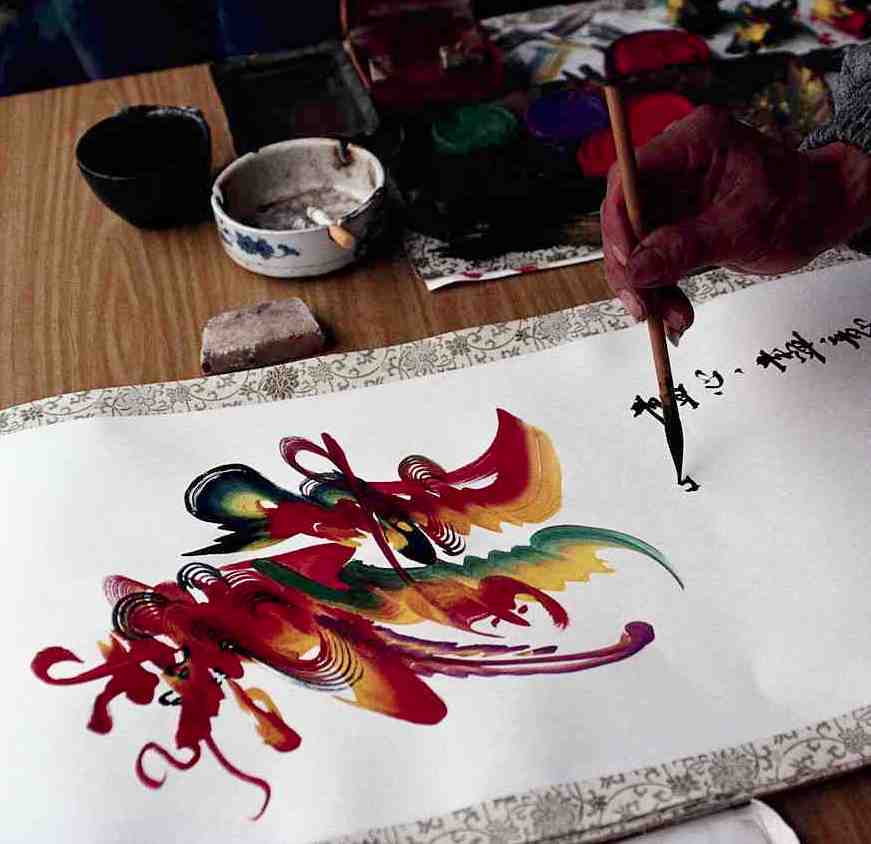
 A Zen master planned to make a painting. He had his chief disciple sit by his side to tell him if his painting was Zen. This means the painting has to be done spontaneously and without hesitation. Unfortunately having a disciple watch over his shoulder was not a good idea as this put pressure on the master. Immediately things started going wrong.
In Japan or in China, the whole art of calligraphy is done on rice-paper. This is a very sensitive and fragile paper. If you hesitate a little, for centuries it can be known where the calligrapher hesitated, because more ink spreads into the rice-paper and makes it a mess. It is very difficult to deceive on rice-paper. You have to go on flowing without any hesitation in your strokes. Even for a single split moment if you hesitate, any one who has a keen eye will immediately say, “It is not a Zen painting at all”. This is because a Zen painting has to be a spontaneous painting that flows out in a creative act.
The master tried and tried and the more he tried the more difficult it became. Soon he started perspiring. And the disciple was sitting there and shaking his head thinking, ‘No, this is not perfect.’ As this continued more and more mistakes were being made by the master. Continue reading